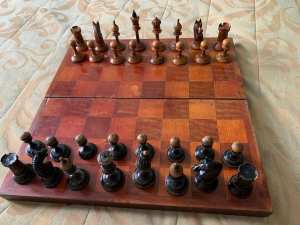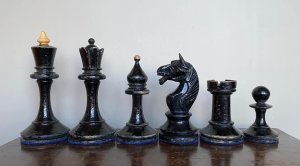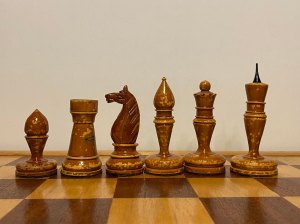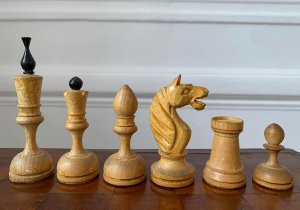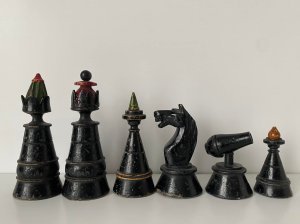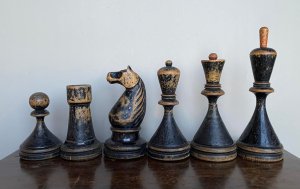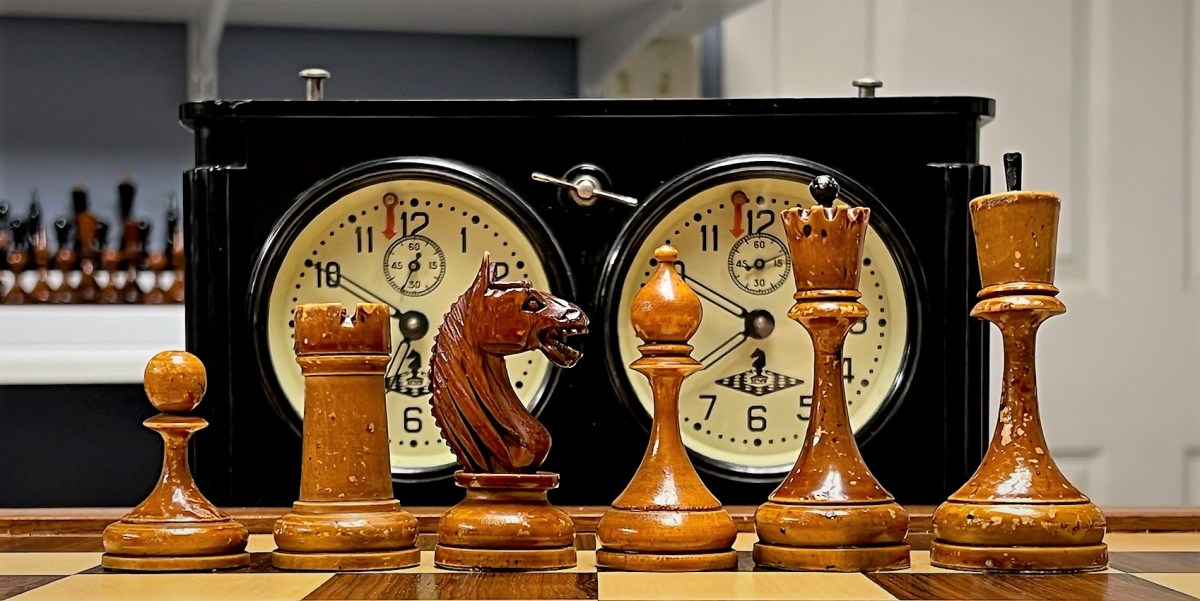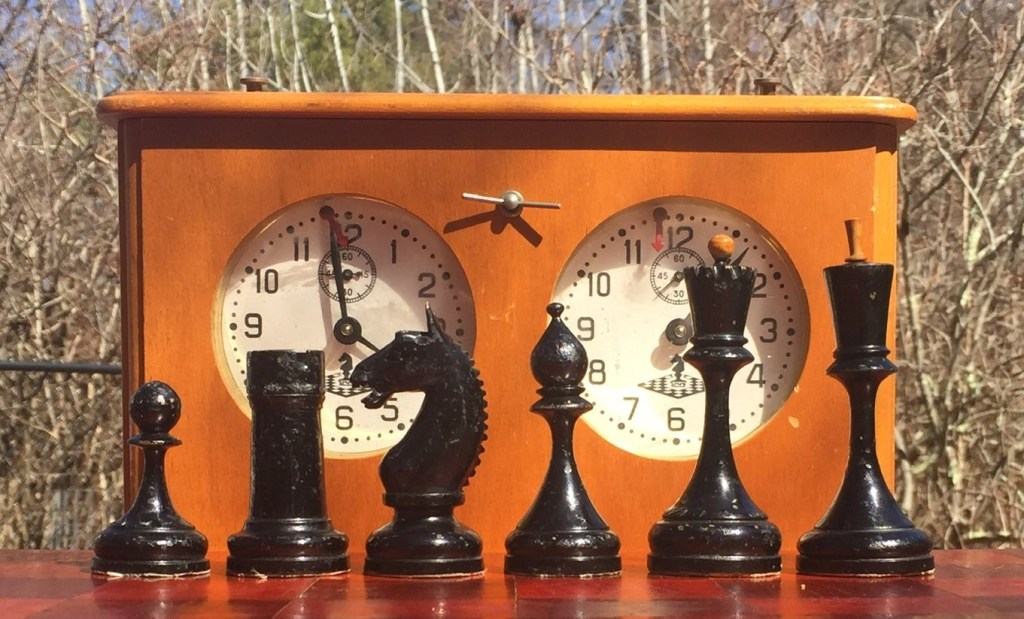
Urban Legend and the Not Very “Latvian” Set

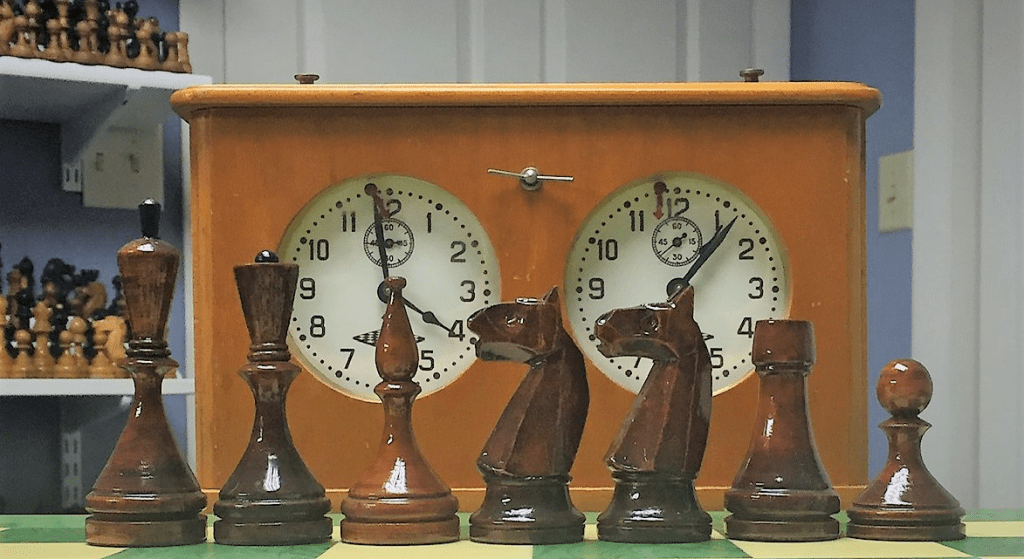
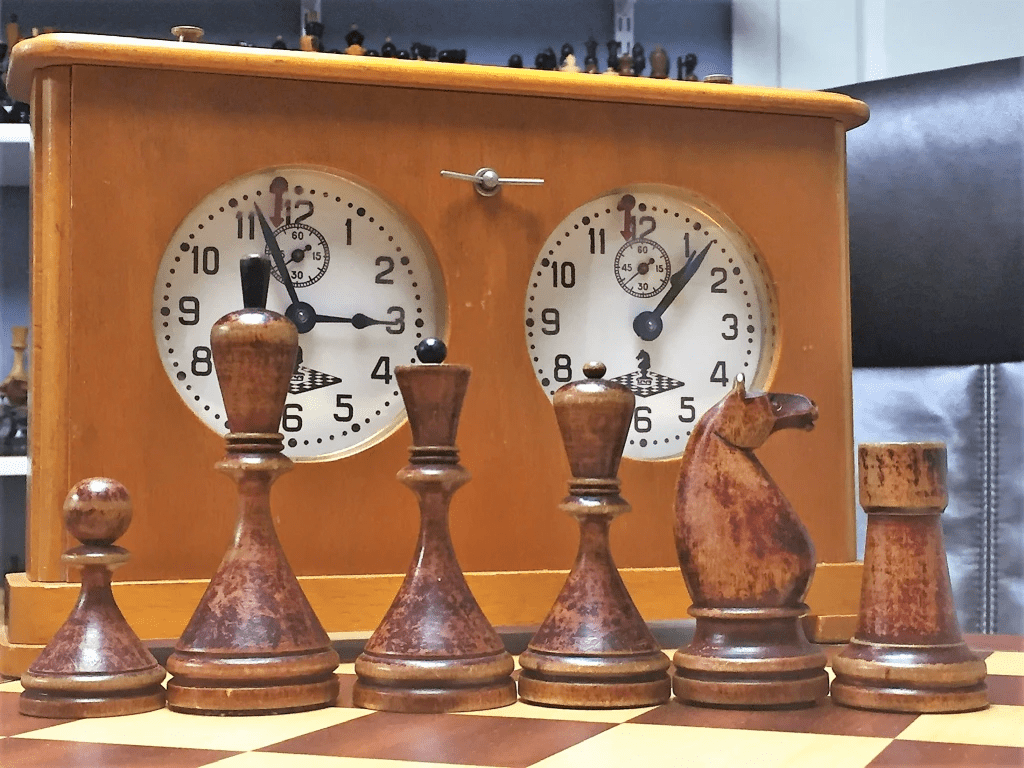
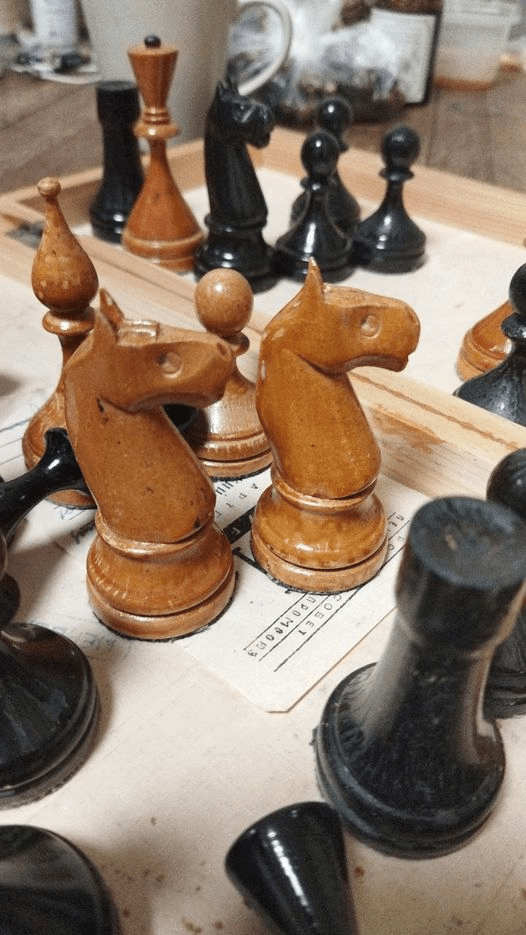
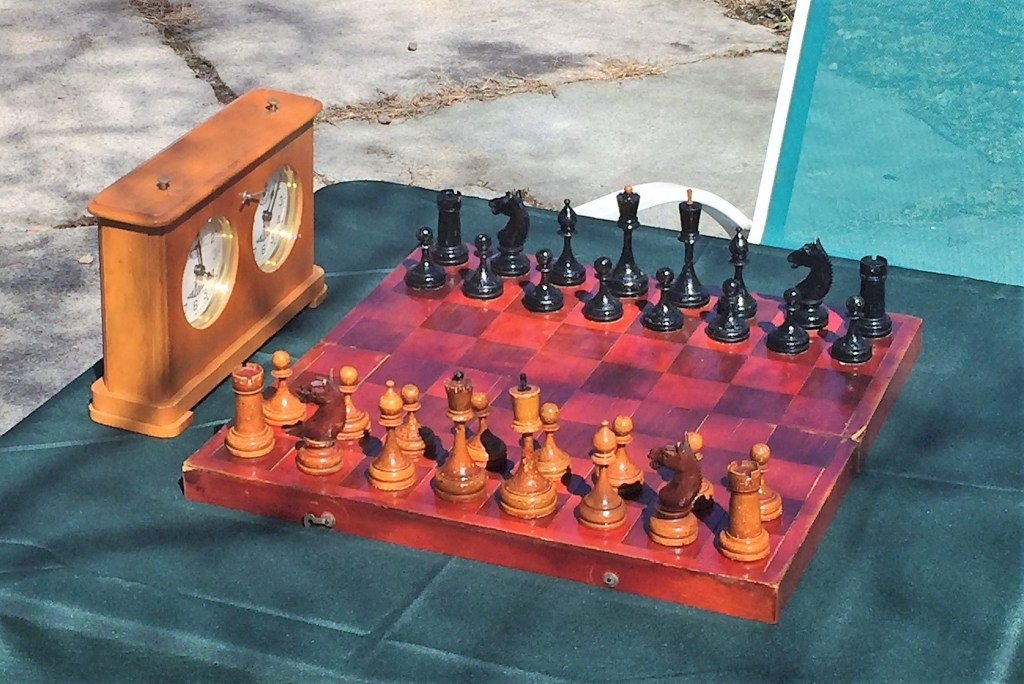
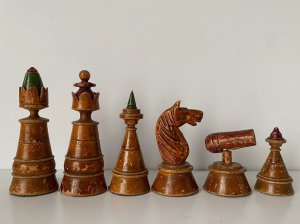
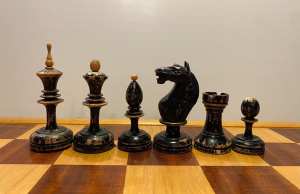
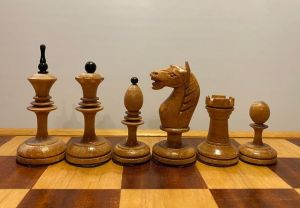
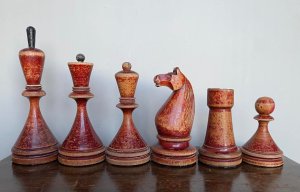
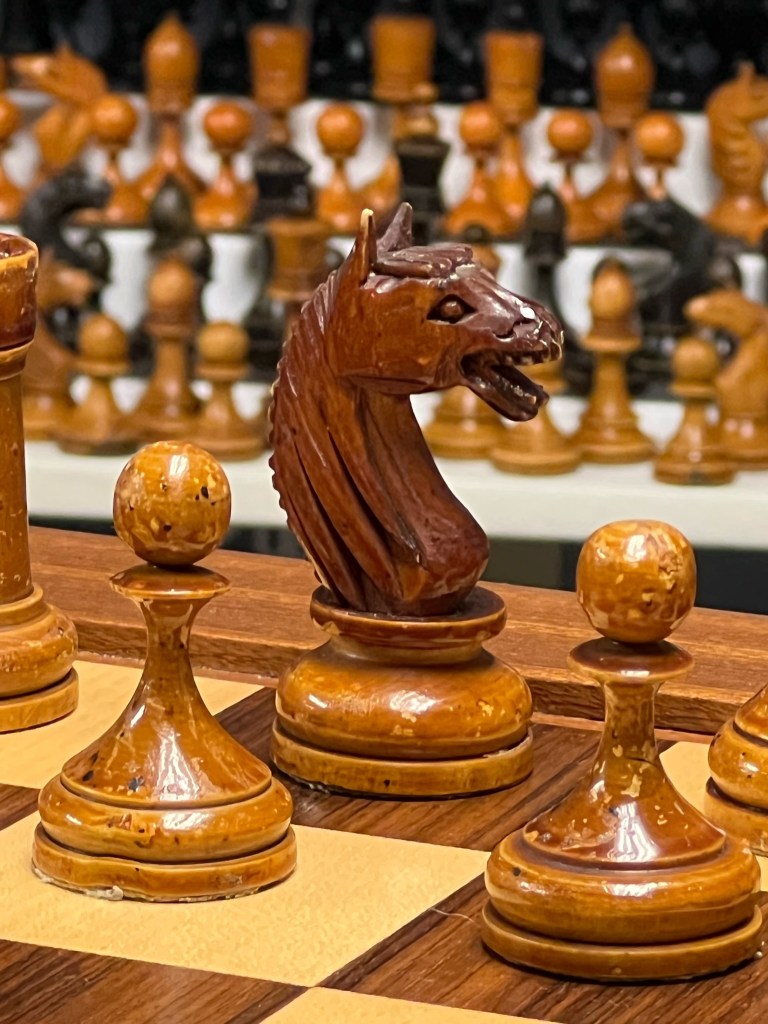
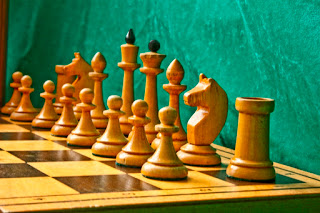
We often see a particular style of Soviet set described as “Latvian” and as “Tal’s favorite.” Although neither claim is supported by the current state of research, both contribute to ongoing misunderstanding of the set’s origin and significance.

According to Merriam-Webster.com, an Urban Legend is an often lurid story or anecdote that is based on hearsay and widely circulated as true. While there no doubt are lurid details about the life and times of Mikhail Tal, none are known to be associated with these pieces.
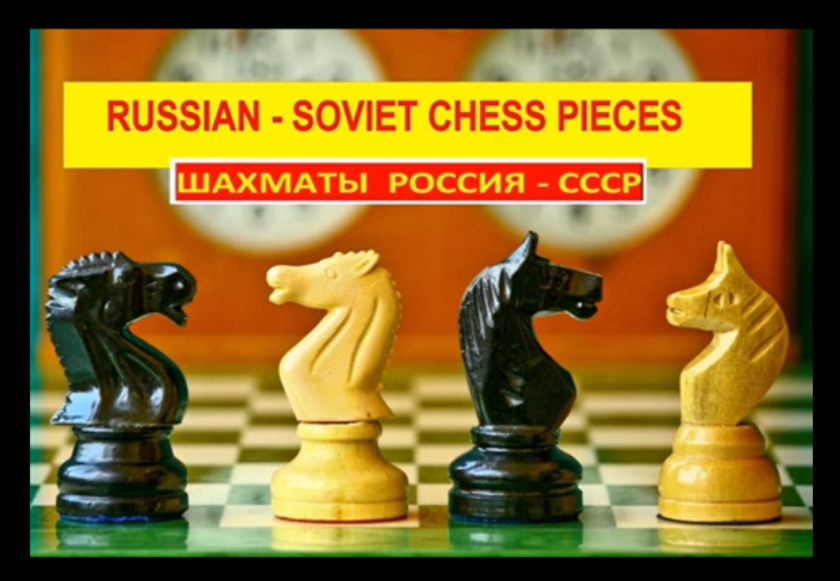
Title Page to Arlindo Vieira, Chess Sets–Russian Soviet (2012).

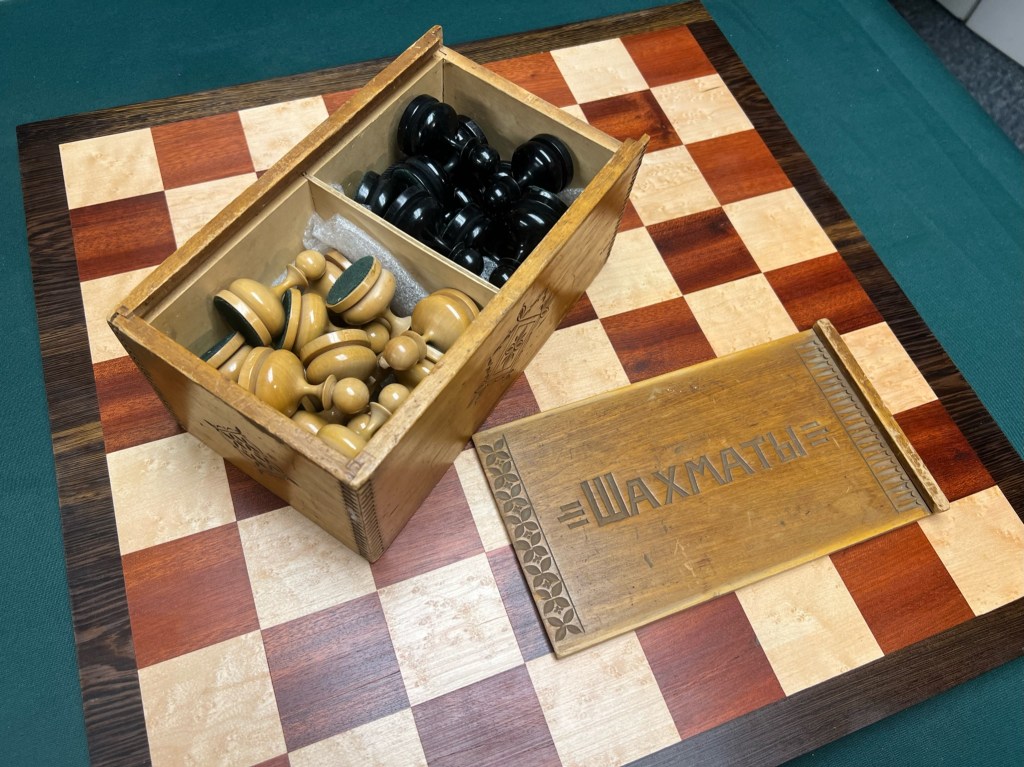
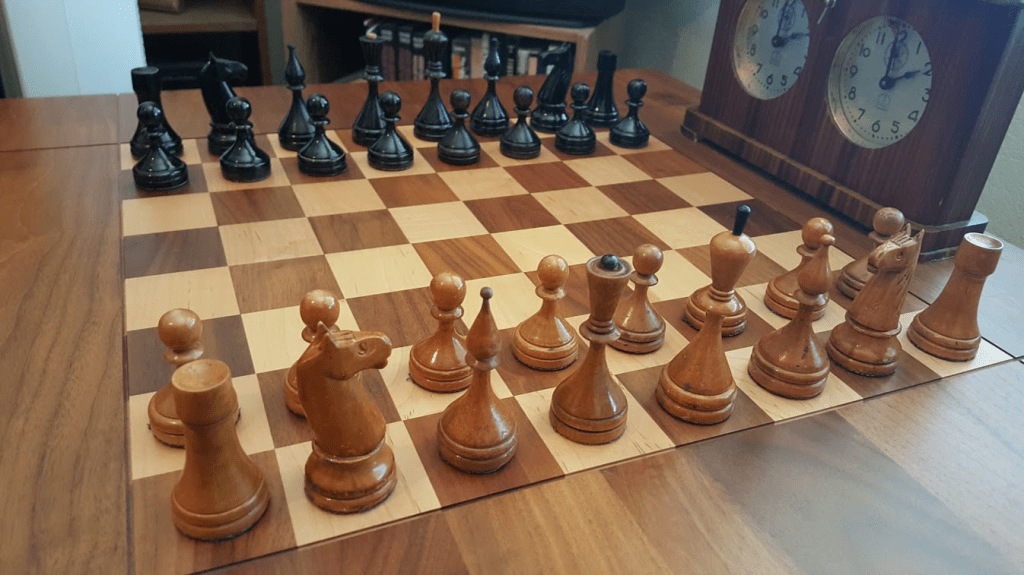
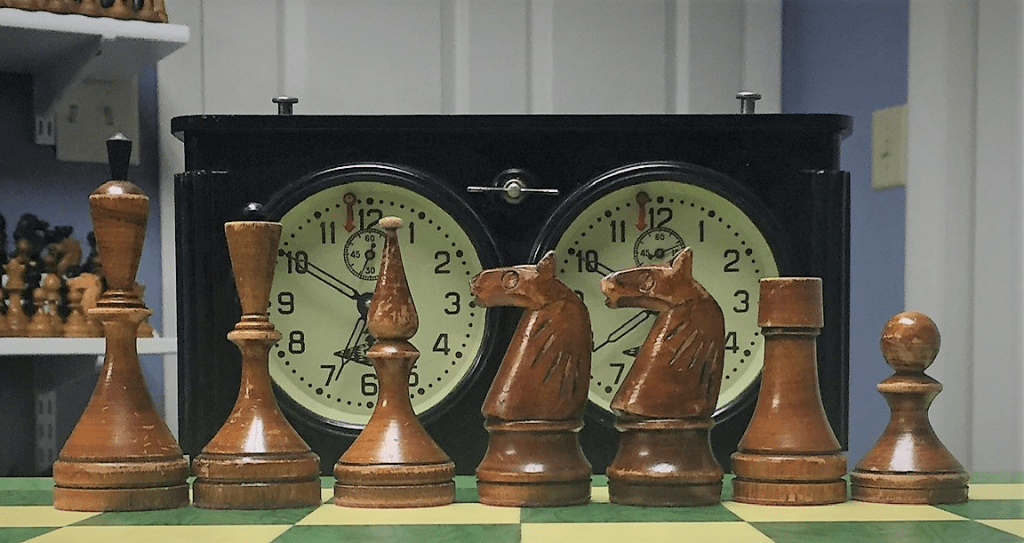
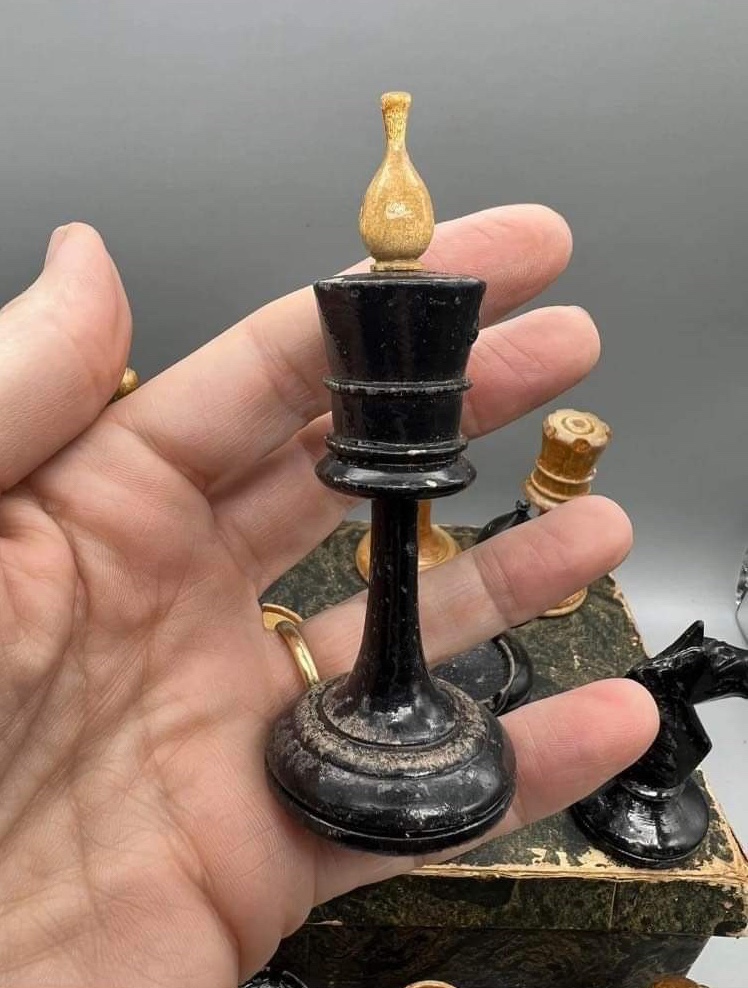
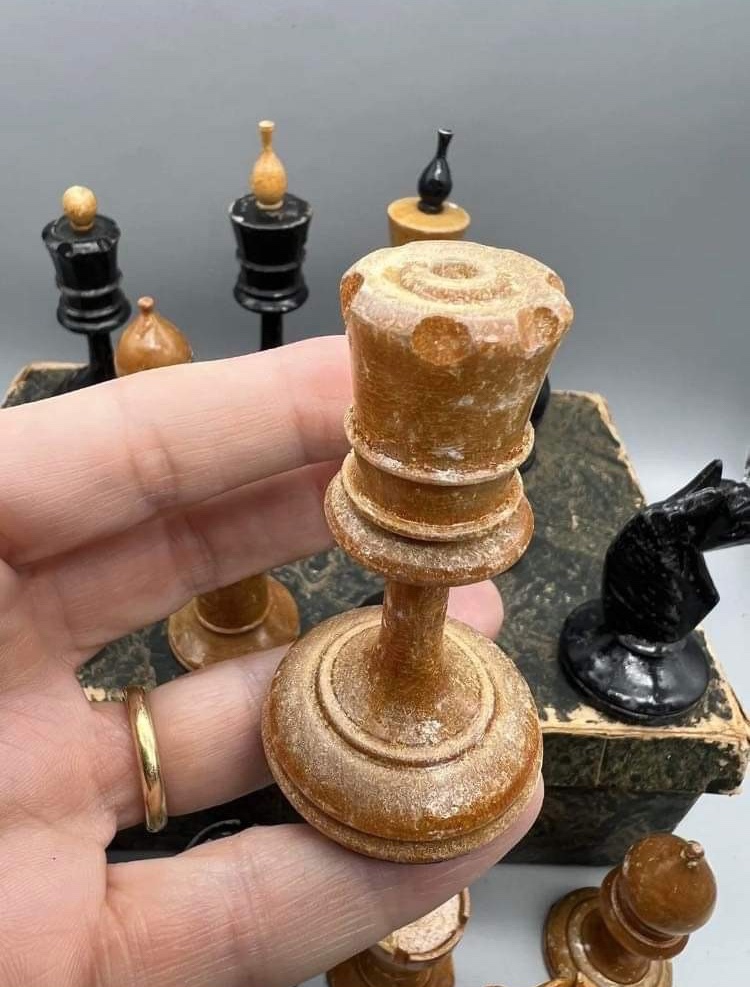
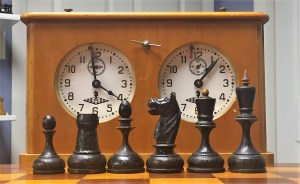
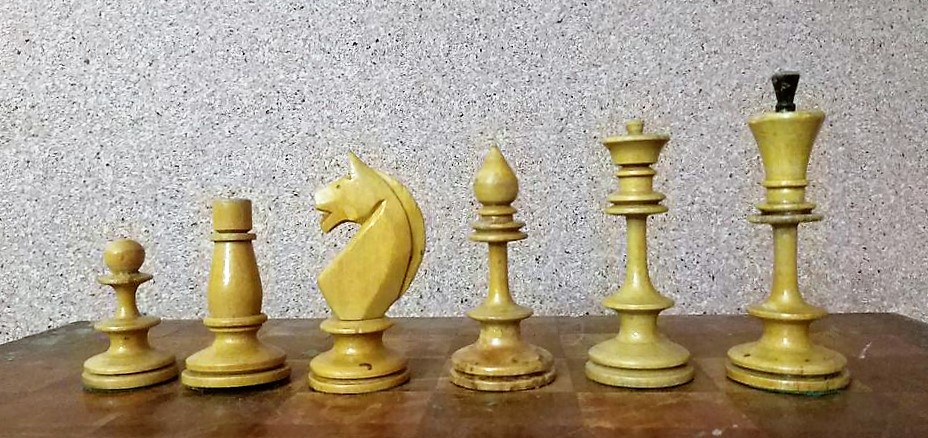
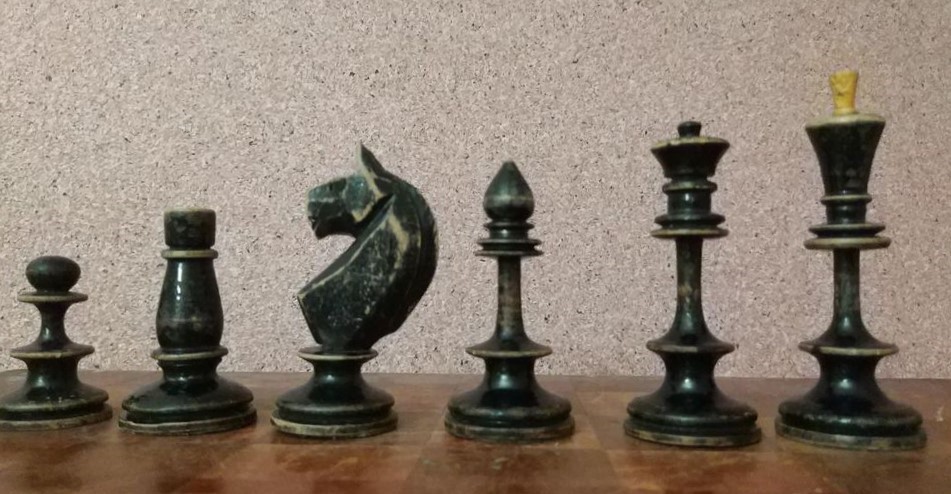
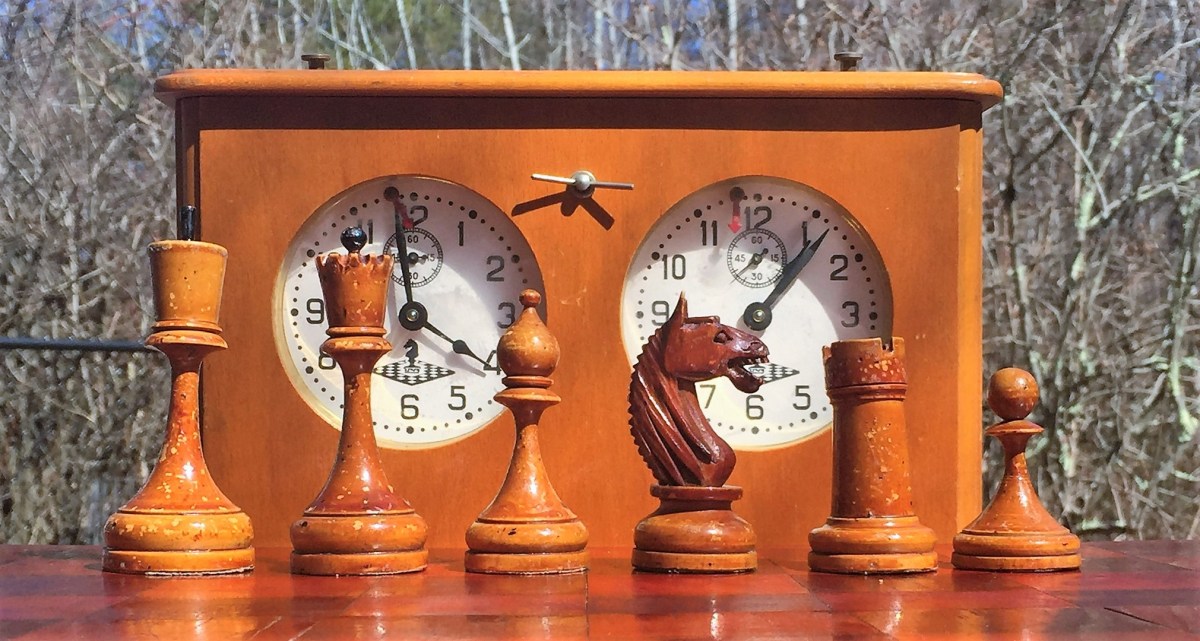
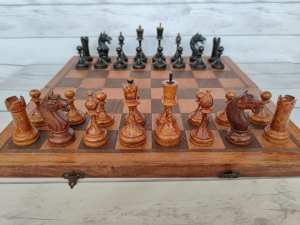
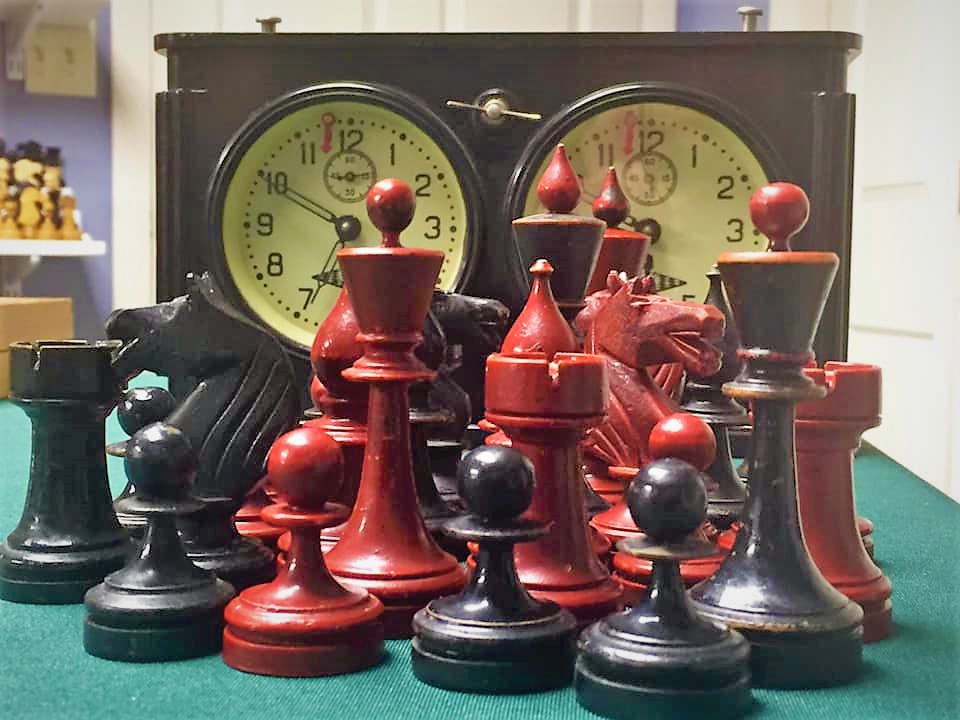
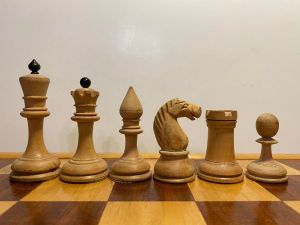
Both claims originate from slides appearing in Arlindo Vieira’s seminal 2012 video on Soviet and Russian chess sets and associated test in his blog Xadrez Memoria. The set appearing in the banner is the one from his collection that he claims to be Latvian. The claim that the set is Latvian arises from a slide in which Arlindo proclaims that “I call this set Latvian” and the other from a slide in which he declares that “He [Tal] loved these pieces!” The first claim rests on a questionable inference; and the basis for collectors repeating either claim is little more than hearsay.

Urban Legend 1: “These Pieces Are Latvian”

Here is the slide that collectors are ultimately relying upon when they claim that sets like Vieira’s are Latvian.

Vieira 2012 Video.

When collectors and dealers claim pieces like these are “Latvian,” they are knowingly or unwittingly referring to this slide, rather than first hand information or research actually linking the sets to Latvia. They are repeating Arlindo’s designation for the truth of the matter asserted–that they’re Latvian– making the statement relied upon hearsay.

A more defensible claim might be: “I believe this set to be Latvian and I am relying on Arlindo’s expert opinion in doing so.” If we consider Arlindo as an expert witness, as I do, we are entitled to inquire into the basis of his opinion. He lays that out in this very slide–the set was popular in Latvia, as evidenced by the many photos he found of like sets being used in Latvian events. His conclusion that the set is Latvian rests on the proposition that a set’s place of origin can be inferred from the frequency with which we find photos of players using it there. As he explains in his blog, Xadrez Memoria:

I have noticed through photos that certain games were used more frequently in the former Baltic Republics, and less, much less in tournaments in the capital or Leningrad, just to give an example. This is the case with these pieces of mine, which curiously appear in dozens and dozens of photos related to Latvian schools, tournaments and players. In fact, curiosity or not, even today at Ebay auctions, when these pieces appear, the sellers are mostly from Latvia, just like the one who sold me the pieces shown here.

On its face, this seems fairly reasonable, but the more we parse it, the less reasonable it becomes. If frequency of appearance in photos and Ebay auctions implies place of origin, what happens when photos of sets used in different venues appear? Or more sets are sold by vendors in Ukraine? The most reasonable response would be to say that the set more likely comes from the place from which the most photos and sales of it arise. We have no idea of how representative his photos and Ebay vendors are. What if, notwithstanding the photos Arlindo examined, more of the sets actually were used in Moscow. Does that make it a Moscow set? Or perhaps there actually are more photos of the set being used in Leningrad, which he missed in his review? Is it now a Leningrad set? My point is that it is not inherently reasonable to definitively infer the origin of the set from a handful of photos without considering how representative the photos are of all photos of Soviet sets in all locations. We just don’t know from the evidence presented in Arlindo’s video and website. But I think it’s fair to say that since 2012, we have examined more photos of Soviet sets in use than Arlindo did or could access back then.

I think the best way to understand Arlindo’s statement “I called this set Latvian!” is as an hypothesis, rather than a firm conclusion. He called it “Latvian” based on photos and Ebay listings he found. It’s reasonable to form an hypothesis based on such limited research. But like every other hypothesis, its validity is subject to being tested by the collection and analysis.

Berezovsky Children’s Penal Colony pieces. Chuck Grau Collection, photo.

Since 2012, a great deal of data has been uncovered that overwhelmingly indicate that sets of this basic design were made in many places, but not one of them is Latvia. We find evidence of them having been made in a children’s penal colony in Siberia, in Gulags in Mordovia, artels in Khalturin and Ivanovo, and in state factories in Ivanovo and Semenov. We owe a debt of gratitude to Vladimir Volkhov for his research into the sources of production, reported in his wonderful blog, Retrorussia. And this evidence consists of much more direct evidence than photos of use. It comprises stamps and labels identifying places of origin on and in the boxes containing the actual pieces. This is hard evidence, allowing far stronger inferences than could be made in 2012 in the absence of such a rich record.

This all, of course, begs the question as to what these sets should be called. Vladimir’s solution is to adopt Russian collectors’ practice of naming sets by where they were made. So sets made in Mordovia would be called Mordovian; those in Khalturin, Khalturiskie; those in Semenov, Semenovskie; those in Ivanovo, Ob’edovskie, for the village in Ivanovo Region where the production facilities were located. I think this is a very important part of the naming solution. It incorporates and honors local practice, and ties sets to locations where they actually originated.

But I have two problems with adopting this convention as a total resolution to the naming issue. The first is that it completely ignores the important issue of style. It cannot be disputed that the “Latvian” sets from Berezovsky, Mordovia, Khalturin, Semenov, and Ivanovo are the same general style. That is an important observation, as it indicates design notions and practices transcended localities and regions, and ignoring it leaves important chapters of the story unwritten.

The second problem is that the location convention creates as much confusion as it eliminates. Take the Khalturin example. Many different styles of chess pieces were manufactured there. Under the location convention all of them would bear the same name, and we never could distinguish one from the other in writing without attaching a picture to clarify which one we were talking about. I find that unacceptable.

Ultimately, we need to accept a naming convention that recognizes both style and place of manufacture. And I would include a date, because pieces made in the same style in the same place could vary over time in some significant details. But, then, what should we call this not very Latvian design? I would be comfortable calling the style Berezovsky, in homage to the children of the Gulag who apparently first made them. I also would be comfortable calling them Everyday, in accordance with the category John Moyes found on the label of a set from Ivanov. I like two things about this option. First, it is homage to the Soviet practice of calling consumer items, including sets, by the category of intended use. Second, sets in this style were ubiquitous, truly the everyday sets of many Soviet households. Until we reach some consensus on this, I probably will continue to call the style Mordovian, as I find it the most beautiful iteration of this venerable style.

Urban Legend 2: “Tal’s Favorite Set!”

This one is a real whopper.

“Tal’s favorite set.” Mein Gott im Himmel, how do you know that?

I’ve never seen a collector or dealer asserting this claim to state his or her basis for making it, myself included. One hypothetically might have first hand knowledge: “I knew Tal, and Tal told me it was his favorite set”; or “I watched Tal play and every time he chose the set he chose this one”; or “I listened to Tal give an interview to a Filipino Grandmaster and he said it was his favorite set and that he was the victim of vast international conspiracies.” Wait, that was Fischer. Or, “I read such and such by Tal and he wrote that it was his favorite set.” Or one might have evidence from which one might infer it was his favorite, like multiple photos of Tal using the set in his residence or hotel rooms, or sitting over his mantle or displayed on a shelf.

But no, “Tal’s favorite!” is the claim, without further evidence, only a wink and a nod as if to say the claimant has some special inside information and insight into the Magician of Riga, or belongs to an exclusive club of those who do. I’ve done it myself. Hogwash.

All these claims of special insight into the predilections of one of the world’s most popular champions arise from a single slide in Arlindo’s 2012 video, which his blog does not elaborate:

Vieira 2012 video.

Arlindo’s slide doesn’t even SAY it was “Tal’s favorite.” We all leapt to that specious conclusion ourselves. I’d now characterize Arlindo’s statement as an excited utterance, expressing joy that the pieces could be connected to the charismatic Tal. But it’s not credible evidence that the set was “Tal’s favorite.” All us cognoscenti who imply we have have inside information about Tal’s preferred set, we need to present our evidence, or we need to stop repeating a baseless claim.
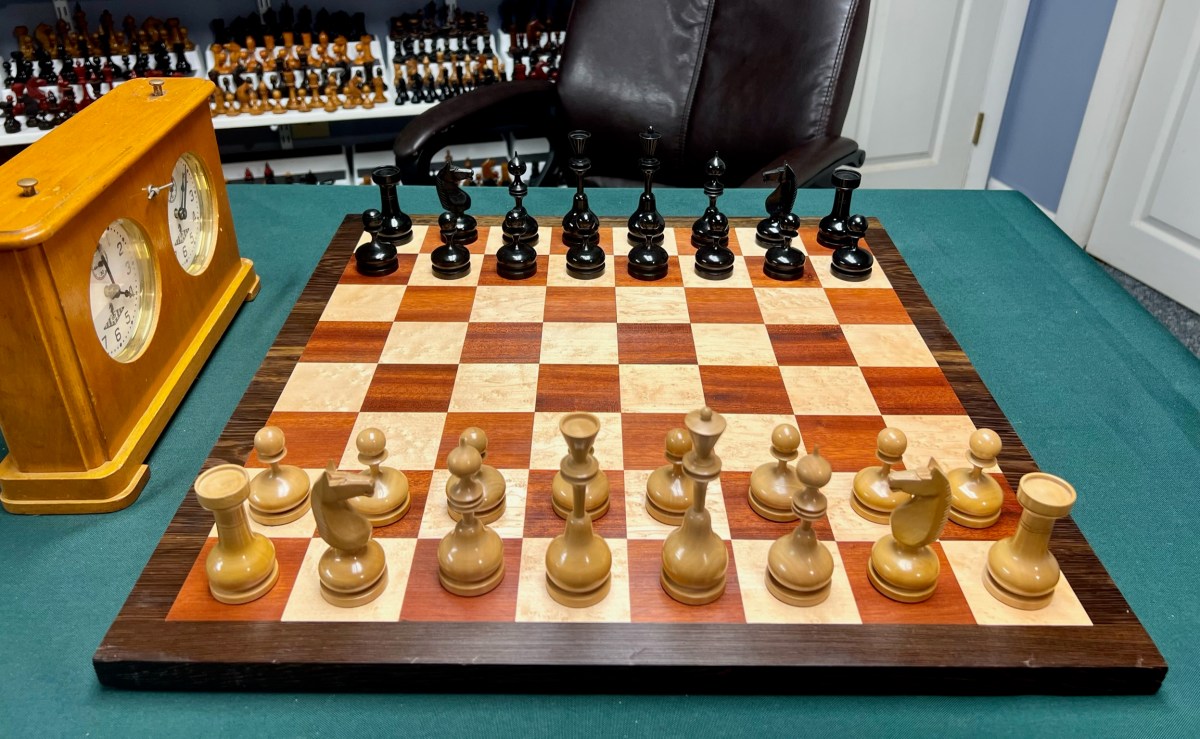
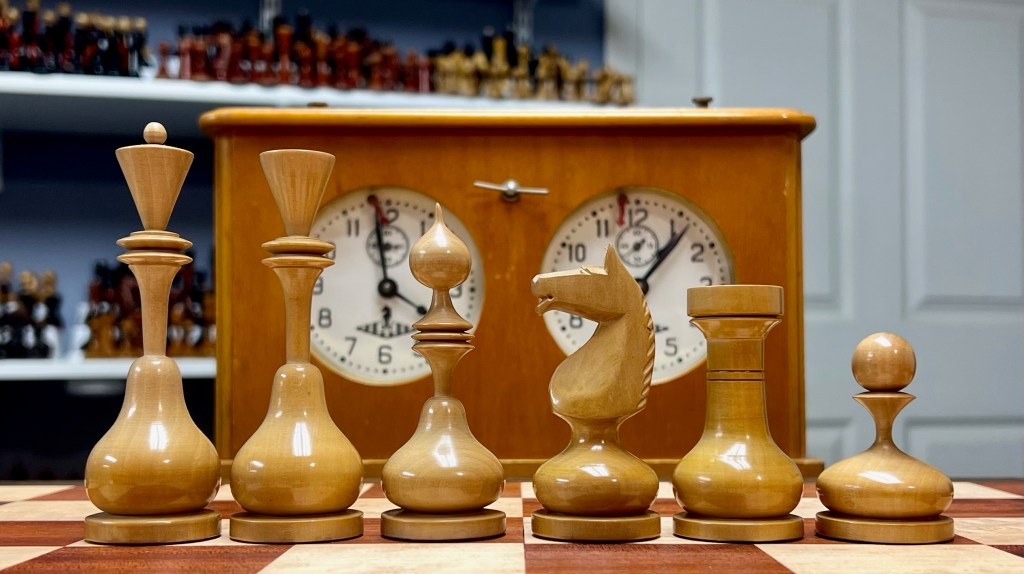
1930s Poltava Artel Sport & Culture Bell-Bottom Set

One of the more unique Soviet sets comprises “Bell-Bottom” pieces, named for the unusual shape of their bases. Here are photos of the c. 1930s specimen in my collection. It came to me in pristine condition.

Chuck Grau Collection, photo.

Collector Sergey Kovalenko’s research suggests that the design originated in the Ukrainian city of Poltava, first produced by the Postyshev Children’s Commune there. Sergey located one set in the State Central Museum of Modern Russian History. Here is a photo of the box housing the Museum’s set.

Source: State Central Museum of Modern Russian History.

The box to my set also contains labels linking it to Poltava.


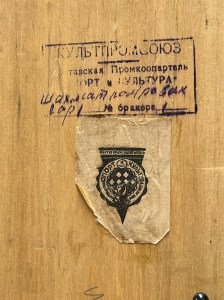
The label references a Poltava artel named “Спорт и Культура” (“Sport and Culture”). The exterior of the box housing my set differs from the one found in the Russian museum.

Chuck Grau Collection, photo.

The Poltava artel’s name “Sport and Culture” is remarkably similar to the well-known Moscow Artel Kultsport. The relation between the two is a topic of future research. It may be that the Poltava artel was the organizational predecessor of the Moscow entity, or that they somehow were affiliated. There is little chance that the similarity in names is purely serendipitous, given the cultural importance of sport to Soviet society.

Poltava is located on the Vorskla River in northeast Ukraine. In 2013 it had a population of roughly 300,000. It first was settled in the seventh or eighth centuries. It long has been considered a center of Ukrainian national identity. Woodworking was among the region’s noted industries in the early 1900s.

While there are no known design records for this set, the pieces’ bell-shaped bases and integrated stems bear some resemblance to the domes of Poltava’s historic Exaltation of the Cross Monastery. Or perhaps the bell-shaped bases are homage to the monastery’s four-tiered bell tower, built in 1786 and housing at least ten bells, the largest of which weighs over 6.5 tons.

Poltava’s Exaltation of the Cross Monastery and Bell Tower. Source: Discover Ukraine.

The Postychev Children’s Commune and its relationship to the Sport and Culture artel are both in need of additional research. The name of the children’s commune hints of one of the darkest chapters of Soviet history, the Holodomor (death by starvation), resulting from Stalin’s policies of collectivizing agriculture and exporting grain from Ukraine SSR rather than using it to feed her people.

Pavel Petrovich Postyshev. Source: Internet Encyclopedia of Ukraine.

With no little irony, the children’s commune linked to this design seems to be named after Pavel Petrovich Postyshev, a Russian politician who Stalin dispatched to Ukraine in 1932 to overcome opposition to the collection of grain. His methods were brutal, earning him the epithet “the hangman of Ukraine,” and generating thousands of orphans, many of whom likely matriculated to children’s communes like that in Poltava. Ultimately, Stalin feared that Postyshev was building a rival power base, and had him arrested in 1938 and shot in 1939. Perhaps Postyshev’s fall from Stalin’s grace explains why subsequent versions of this set no longer bore his name.

The Poltava Bell-Bottom chess set is a beautiful design, possibly linked to Ukraine’s Orthodox architecture and one of the darkest chapters in Soviet history.

“Baku” Pieces from Leningrad Region’s Artel Drevprom

Collectors of Soviet chess sets are familiar with the pieces that have come to have been known as “Baku” chessmen so-named by Western collectors because the photographic record establishes that they were used in the 1961 Soviet Championship held in Baku, Azerbaijan SSR. The name raised eyebrows among collectors in the former SSRs, who typically refer to otherwise unnamed sets by where they were produced, because they understood the pieces to have been manufactured in the Leningrad region.

Gurgenidze and Tal square off at the 1961 Soviet Championship, held in Baku. Tal won the game. Spassky won the championship. Photographer unknown.

The design is well-liked among collectors. Noted American collector Mike Ladzinski names it his favorite Soviet design: “These pieces exude a wonderful board presence. I love the unique Bishops, those whimsical Knights, the wide base Pawns with big ball heads, and the stocky Rooks along with the wonderful Kings and Queens with BFII elements.” The kings range in size around 110 mm and appear in a variety of finishes. Here is a set from Ron Harrison’s collection with blond White pieces like those shown in the Tal photo above.

Ron Harrison Collection, photo.

A red-orange specimen resides in my collection. It came with a board stamped Red Combine bearing a hand-written gift inscription “In memory of Yuri, from relatives,” and “1951” inside the box. While I don’t think that Red Combine manufactured the pieces, I do think the board is contemporaneous to the pieces, and is evidence of their dating.

Chuck Grau Collection, photo.

Here are two other specimens from my collection.

Chuck Grau Collection, photo.

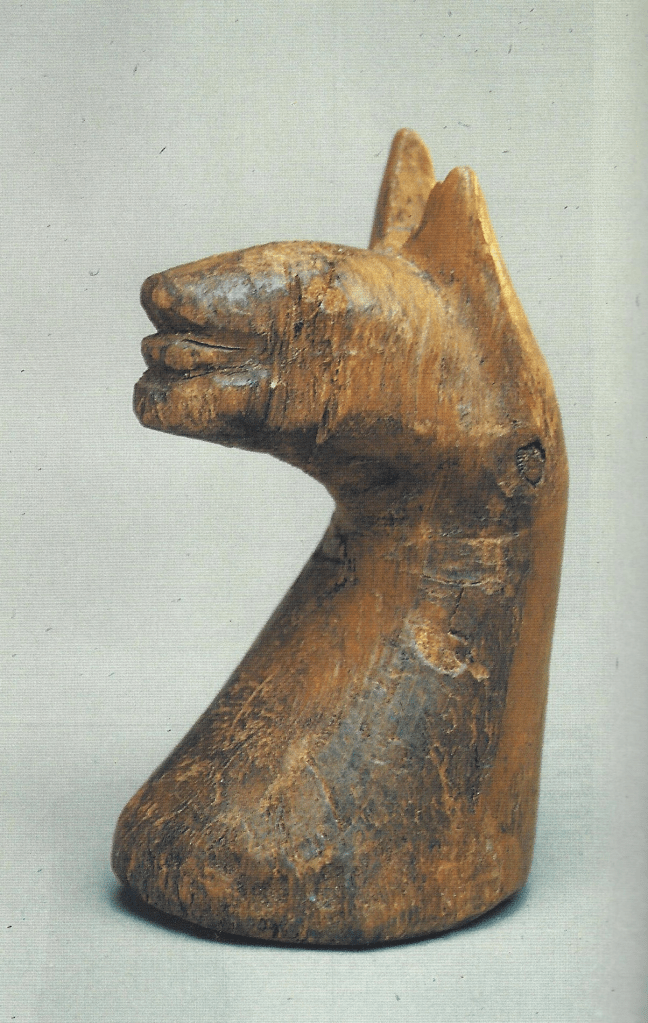
The pieces exude modernist design influences, combining them with a twist of Ancient Rus. The base and stems have been simplified into a single conical structure, which after a tapering ascent flairs out to form pedestals upon which the piece signifiers rest. The royals’ piece signifiers are attached to the pedestals by a double collar connector, reminiscent of basic Staunton design. The sweeping, curved tower walls of the rooks rhyme with the base and stem structures of the royals, clerics, and pawns. The knights are simply carved and tubular, bearing a striking resemblance to an early 15th century horse unearthed in an archaeological dig of ancient Novgorod, which I like to describe as “Novgorod Knight.”

Isaac Linder, Schachfiguren im Wandel der Zeit photo.

Inasmuch as the dig occurred after the Baku first appeared, I cannot claim that they were directly copied. The connection may exist in the recesses of the collective unconscious of Russian art, a topic for another day.

The three sets that I have reweighted all came with cavities stuffed with a combination of glue and sawdust that reeked when drilled.

While variations in piece heights, base widths and structure, finishes, and snout sizes are observable, I don’t find them significant or systematic enough to merit any sub-genuses of the design, with one exception. Some sets contain faceted knight bereft of the simple mane carvings found on the tubular knights. Here is an example.

Chuck Grau Collection, photo.

While it seems clear that the faceted knights are a simplification of the main design inasmuch as they are easier and quicker to make, I don’t find that there is direct evidence at this time sufficient to say whether the faceted design or the tubular one came first. But I do find some compelling circumstantial morphological evidence probative of the issue. Consider this set, commonly known to collectors as the BFII Penguin Knight set owing to the shape of the knight. It appears in the photographic record right about 1940.

BFII Penguin Knight set. Chuck Grau Collection, photo.

The unitary conical base-stem-pedestal configuration of the Penguin Knight set is virtually identical to that of the Baku sets. The knight shares the same Novgorodian form. Even the facial carvings appear similar. The royals’ piece signifiers are very close in shape to those of the Bakus. The Penguin Knight’s bishop has an altogether different miter, and is attached by a double-collar connector that has disappeared in the Bakus even as it remained in the Baku royals. The Penguin Knight’s rook is a typical, straight-walled BFII rook characteristic of BFII sets from the 1930s and later, whereas the Baku rook’s walls are curved to repeat the general shapes of the royals, clerics, and pawns. I infer from this that the Baku design derived from the Penguin Knight BFII some time after 1940. Further research may shed some light on this morphological relationship.

Already St. Petersburg collector and researcher Sergey Kovalenko has tied the Baku design to the early- to mid- 1950s. Here are two photos Sergey dissects.

Source: Sergey Kovalenko

Source: Sergey Kovalenko

Writes Sergey:

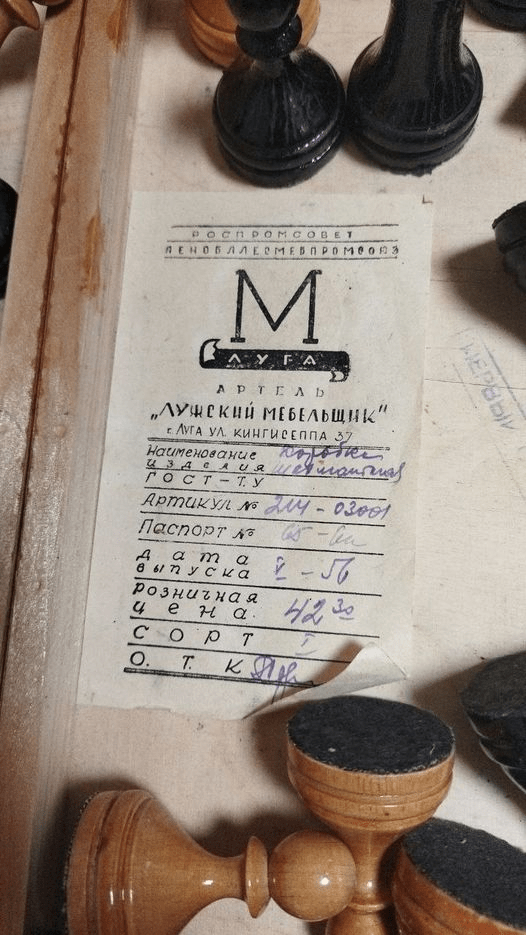
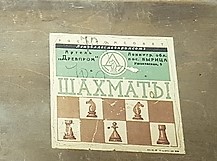
New label. “White Baku” chessmen with the “native” board. By “native” I mean same period board. Both artels (“Древпром” and “Лужский мебельщик”) from Leningrad region. According to accounting documents located in the archives of the Leningrad region, the “Drevprom” artel produced two types of chess and many other wood products, with the exception of chess boards. The “Luzhskiy Mebel’shik” artel produced a lot of wooden furniture, as well as chess boards, but did not produce chess. It is worth noting that the situation could change over time. The documents viewed in the archive relate to the period 1953-1956.

Russian Chess Sets (Tsarist, Soviet and Modern), 14 November 2022.

Sergey’s research is supported by the emergence of at least one Baku specimen in an original cardboard box from Artel Drevprom. Graphic images of the Baku pieces appear on the box’s cover.

Violity photo.

Violity photo.

Artel Drevprom’s Baku set is a much-loved design with ties to Old Rus, the renaissance of chess set design in the Soviet Union of the 1930s, and the dominant chess played at the highest levels of Soviet competition.

Another Vsekokhudozhnik Upright Specimen Emerges

Another example of a Vsekokhudozhnik Upright recently sold on EBay.UK, collector Vikhram Ravi reports. The specimen was of the rarer 3.75” king variety, and was complete with its original box, Artel stamps, and a retail label. Here are the photos posted by the seller, bovkey109.

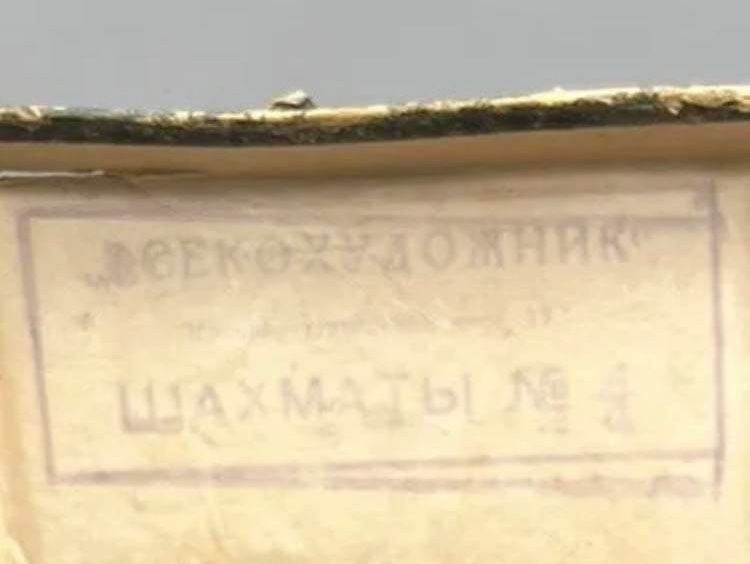
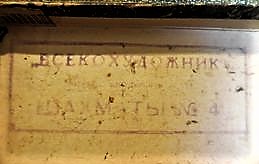
The Vsekokhudozhnik stamp, Chess No. 4, likely denoting the size of the set. The significance of this artel is discussed here.

According to St. Petersburg collector and researcher Sergey Kovalenko, the colorful label affixed to the inside of the box is from Дом ленинградской кооперации” (The House of Leningrad Cooperation), the largest department store in Leningrad from 1927 to 1935.

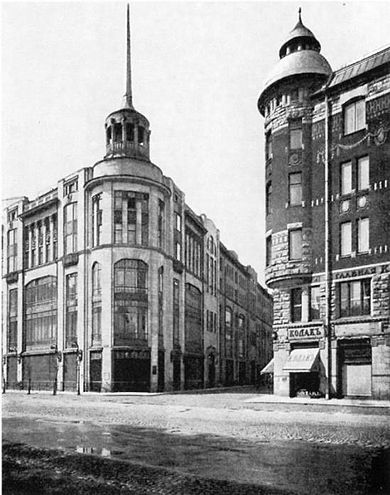
The site of the Leningrad House of Cooperation, as it appeared in the 1910s. Public domain photo.

The pieces and finials are nicely turned and shaped. The finish is worn.

Off-center and missing finials are not uncommon in vintage Soviet sets.

The woven “felts” appear to be in very good condition.

Many thanks to Vik and Sergey for their contributions to our growing understanding of Soviet chess sets.

A “Leningrad Schoolboy” Set in a Vsekokhudozhnik Box

One of the things I like about writing for this website and managing the Facebook group Shakhmatnyye Kollektsionery is how posts often generate discussion and further discoveries. So it was with our recent article on The Ubiquitous Soviet Upright Pieces of Artel Vsekokhudozhnik.

St. Petersburg collector and researcher Sergey Kovalenko has reviewed his archives and found a second well-known set in an Artel Vsekokhudozhnik box. The set had been sold some time ago by an Etsy and eBay dealer known as Antikvar to a buyer unknown at this writing. Sergey kept photos from the set’s listing for his archives. He has generously shared them with us.

The label appears identical to that found in Mykhailo Kovalenko’s specimen discussed here. The top line recites the name of the artel; the middle line appears to give its address. The bottom line describes the contents: Chess (set or pieces) No. 4, presumably indicating their suitability for play on a board with 40 mm squares.

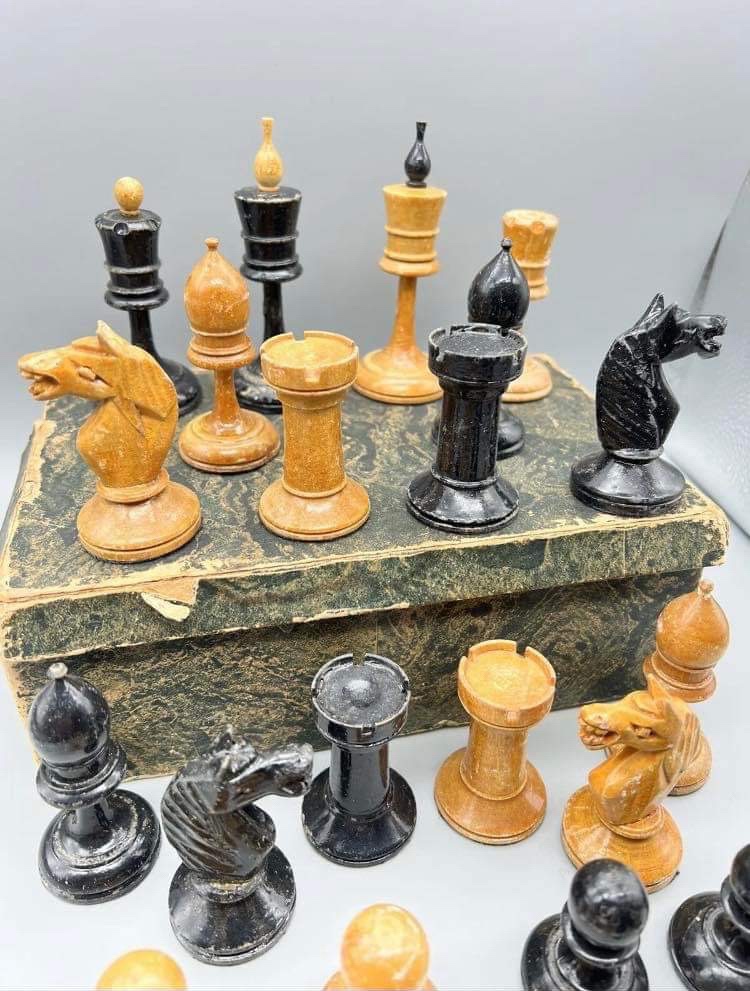
The pieces are easily recognizable and fairly common today, and generally are considered to come from the late 1930s or pre-war 1940s. Arlindo Vieira described them in 2012 as “Soviet Championship” pieces of the 1950s and 1960s, but we now know that the championship sets sharing many of this set’s design elements were from the BFII family. Russian collectors refer to the design as the “Leningrad Schoolboy” set as it is found in photographs of Leningrad schoolboys playing with them. Here is one such photo from the St. Petersburg Archives provided by Sergey.

Leningrad, c. 1937. St. Petersburg Archives. Photographer unknown.

As Moscow collector Alexander Chelnokov informs us, many of the known specimens of the “Leningrad Schoolboy” design were sold from Leningrad. Others have been sold from Ukraine. Sergey tells us that the photographic record shows them being played with in locations other than Leningrad.

Whether the “Leningrad Schoolboy” sets were made by Artel Vsekokhudozhnik in Moscow and sold elsewhere I cannot say. One respected dealer from Kiev suggested to me that this design was manufactured in multiple locations. Inasmuch as there is no hard evidence that any entity other than Vsekokhudozhnik produced them, and that I know of only three surviving Vsekokhudozhnik boxes, I am hard-pressed to simply dismiss the Antikvar specimen as a case of a box mismatched with a set of pieces. I cannot dismiss the possibility that the sets were made in Moscow and transported to Leningrad and elsewhere for sale and use. At the same time, I find the suggestion of multiple points of production to be plausible. As with so many other issues involving Soviet chess sets, more research and evidence are needed.

Here are photos from a specimen in my collection, which I obtained without an original box from Ukraine.

My specimen has 87.5 mm kings. The pieces are unweighted, and have cloth bottoms.

Updated 28 February 2023

The Ubiquitous ‘Soviet Upright’ Pieces of Artel Vsekokhudozhnik

If you follow this website or the Facebook group Shakhmatnyye Kollektsionary, you know that our knowledge of Soviet chess sets remains far from complete, even though it is growing. One thing we have learned, helped by Sergey Kovalenko’s research into Soviet archives, is that chess pieces (shakhmaty) and chess boards (shakhmatnyye doski) were seldom produced or sold as a unit, at least prior to the Great Patriotic War. Rather, they typically were produced, marketed, and sold as separate components, with the pieces housed in cardboard boxes. The evidence for this and its implications for dating and identifying pieces’ manufacturers will be explored in a future article. Few of these cardboard boxes have survived to the present, making every discovery of one previously unknown significant.

Mykhailo Kovalenko (no relation to Sergey) recently found a set of so-called “Soviet Upright” or “Botvinnnik-Flohr I” pieces housed in an original cardboard box. His discovery has allowed us to identify who likely made the pieces, and to help us situate them in the historical context of Stalin’s Soviet Union. Here are specimens of the type of pieces I am referring to:

Chuck Grau Collection, photos.

We already have explored this design and the inaccuracy of the “BFI” name in our article on the pieces of the 1933 Botvinnik-Flohr match, and won’t repeat the discussion here. Quite a few specimens of these pieces have survived, from which we can reasonably infer that quite a few of them were produced. Indeed, evidence of their use in the second half of the 1930s can be found in the photographic record.

Nikolay Grigoriev (1895-1938), c. 1936. Photographer unknown.

Here are the pieces and the cardboard box discovered by Mykhailo.

The bottom line of the stamp identifies the contents of the box as Chess Pieces No. 4, likely meaning that they were appropriate for a size 4 board with 40 mm. squares. The middle line gives a Moscow address. The bottom line of the label provides the name of the entity that manufactured the pieces: Vsekokhudozhnik, which translates to All-Russian Cooperative Association ‘Artist.’ Wikipedia offers the following photo of the production facilities.

Moscow. The building of production workshops of Vsekokhudozhnik. Creative Commons license.

Simply identifying the entity that produced a board or pieces tells us little about the entity itself. Most of the artels and Gulag workshops that produced chess equipment remain shrouded in mystery, as we have discussed earlier. Such information is important in situating that equipment in its social, historical, economic, political, and cultural context. That context included both use value of the equipment, and the social relations and political economy of their production.

The equipment had use value at two levels. Most concretely, it was used to play chess. Chess playing was not for the sake of chess in the Soviet Union, however, but to manifest Political Chess, the state’s policy to use chess to raise the cultural levels of the masses and to defeat the West in this arena of cultural competition. As we have seen, Political Chess demanded a continuously expanding supply of chess equipment. The means and social relations of the production of these sets were structured by the evolution of Soviet economic policy from War Communism to to NEP to Stalin’s Five-Year Plans, as we have begun to explore here.

We also have seen how the design of Soviet pieces reflected a dialectic between Modernism and Traditionalism. We have begun to explore that dynamic as a manifestation of Stalin’s cultural policy for the arts, namely the suppression of the Modernism of the Avant Garde and the official endorsement of Socialist Realism.

Socialist Realism portrayed an idealized view of the Soviet Union through the use of realistic images and forms. Maxim Gorky outlined its basic principles, declaring that Socialist Realist art must be proletarian; it must be typical, addressing the everyday lives of the Soviet people; it must be Realist in style; and it must be partisan, actively promoting the aims of the Soviet state. For Stalin, Socialist Realism meant that art must offer unambiguously positive images of life in the Soviet Union, in a ‘true-to-life’ visual style that the masses could readily digest. The Art Story (accessed 18 May 2022).

Isaak Brodsky, Stalin (1933), an example of Socialist Realism. Public Domain.

Vsekokhudozhnik was instrumental to the institutionalization of Socialist Realism and concomitant marginalization of the Avant Garde. Its production of chess sets both facilitated the success of Political Chess and helped bankroll the institutionalization of Socialist Realism.

The early 1920s saw a proliferation of artists’ groups, many of them by different groups within the Avant Garde. But some of the groups opposed the Avant Garde, notably the Association of Artists of Revolutionary Russia (AKhRR), which contended art should depict the happy aspects of everyday life under socialism via “artistic documentary” and “heroic realism.” Noted Suprematicist Kazimir Malevich (1879–1935) wrote in 1926 that the Association was “drowning the remains of art in its quagmire,” “We must overthrow this AKhRR,” he penned, “but we must be careful–so that this rot doesn’t bring any damage.” Murray infra.

Kazimir Malevich, Boy (1927-1928). Public Domain.

Throughout the 1920s, the Avant Garde nevertheless lost ground to the Realists. Art historian John Bowlt explains that Socialist Realism grew ascendant in the later 1920s, “a relentless move towards ‘art that is national in form and socialist in content.'”

Symptomatic of this was the opening of the Artists’ Cooperative Organization (Vseko-khudozhnik) in Moscow in 1929, a rich and active government organ. It provided its members (painters, sculptors and architects) with regular contracts from workers’ palaces, government offices, etc., and it gave direct material aid to artists and arranged exhibitions for them -with the unwritten prerequisite that the works produced be Realist and socially relevant. By the late 1920s leftism was officially being condemned although still tolerated: this situation meant that, while leftist exhibitions were still organized and opened to the public, their reception by the Press and critics was, because of government influence, negative.

John E. Bowlt, Russian Art in the 1920s, 22 Soviet Studies 575,591 (No. 4 1971)

Vsekokhudozhnik was founded under the name Khudozhnik (Artist) at the cusp between NEP and Stalin’s First Five-Year Plan.

In 1932, the Communist Party Central Committee adopted a resolution, On the Reformation of Literary and Artistic Organizations, which decried “the influence of alien elements, especially those revived by the first years of NEP.” The resolution claimed that “the confines of the existing proletarian literature and art organizations (VOAPP, RAPP, RATIM, etc.) are becoming too narrow and are hampering the serious development of artistic creation.” It expressed fear that “these organizations might change from being an instrument for the maximum mobilization of Soviet writers and artists for the tasks of Socialist construction to being an instrument for cultivating elitist withdrawal and loss of contact with the political tasks of the present and with the important groups of writers and artists who sympathize with Socialist construction.” The resolution called for the abolition of these artistic organizations and the integration “of all writers who support the platform of the Soviet government and who aspire to participate in Socialist construction in a single union of Soviet writers with a Communist faction therein.”

Accordingly, in 1932, Khudozhnik was reorganized as the All-Russian Cooperative Union of Fine Arts Workers (Vsekokhudozhnik). Independent artistic groups were dissolved. Murray, infra.

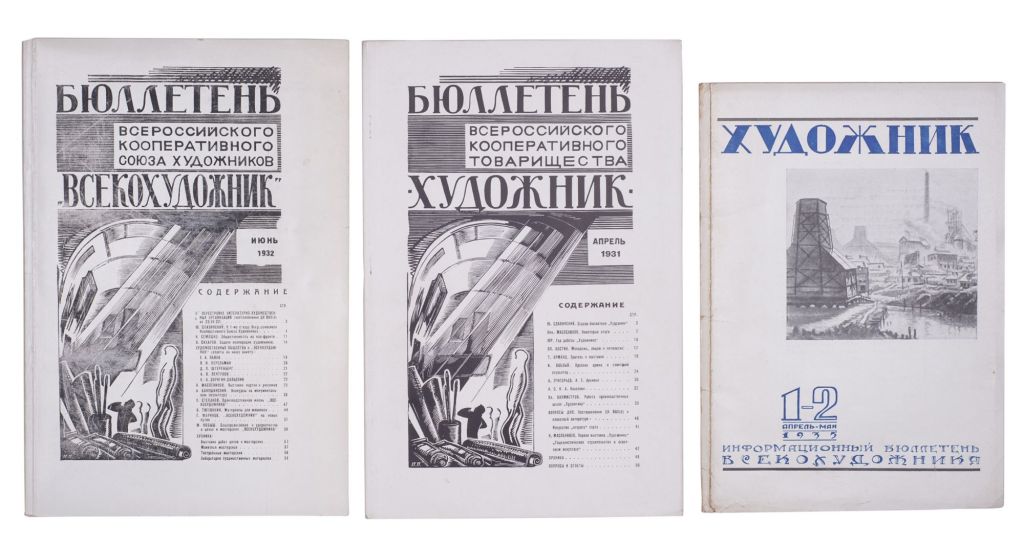
The Artel’s Journals, left to right, for 1932, 1931, and 1935. Bookvika photo.

Historian Galina Yankovskvaya of the Perm State National Research University reports that none of the artel’s founders were among the Avant Garde, though many Avant Garde artists did join it to obtain art materials and sell their works to various state entities comprising its clientele. It introduced collective work, organizing artists into brigades, and pressed them into the mass production of household goods and mass-market art. Among its most famous products were dolls crafted and sold for export.

The exclusion of Avant Garde artists as founders of Vsekokhudozhnik clearly was no oversight, as it reflected their official marginalization. Moreover, the inclusion of Avant Garde artists as members was not intended to create organizational pluralism, but to operate instead as a mechanism of social control. Artists depending on Vsekokhudozhnik for subsistence were economically coerced to toe the line.

Without its help, it would have been impossible for artists to work. It supplied them with canvases and paints, gave advances and loans, ordered and bought works, sent them one by one and ‘brigades’ on creative business trips – mainly, as it was then supposed, to factories and construction sites. It organized contests of monuments projects. Various workshops worked, either serving the artists or giving work to them. Moreover, the money earned on the sale of embroidered scarves and shawls, pottery and toys, went to ensure the unprofitable work of easel painters.

Bookvika (accessed 9 November 2022)

Vsekokhudozhnik‘s control over artists was not limited to economic coercion. From 1932 on, writes art historian Natalia Murray, it was used to monitor and control artists by ensuring their work complied with the tenets of Socialist Realism.

A clear hierarchy of genres was established, and new heroes and new subjects (such as Communist Party leaders, Party meetings, workers and workers’ delegates, miners and builders) were obligatory for every artist who hoped so survive under the new regime. The avant-garde was stopped dead in its tracks. Any artist deviating from the official Party line was denounced as a formalist and at best cut off from support, and at worst left to die of starvation or sent to the remote camps of the Gulag.

Natalia Murray, “The New World of the Mass Man,” Revolution: Russian Art 1917-1932 25 (Royal Academy of Art, 2017)

Vsekokhudozhnik was transferred into the jurisdiction of the People’s Commissariat of Education of the RSFSR in 1935, and assumed responsibility for issuing copyrights. In 1940, it was transferred to the Council of Commissars of the RSFSR, and later to the Council of Ministers of the RSFSR. The artel dissolved in 1954 and its functions transferred to the Art Fund of the USSR.

The recent discovery of well-known and well-liked chess pieces in their original cardboard box has revealed where they were made, and has historically situated their maker at the epicenter of Stalin’s institutionalization of Socialist Realism as the official theory and practice of art. The sale of these sets helped support that process.

“He’s an Egyptian!”

The 1920s saw the world mesmerized by the discovery of the tomb of the young Egyptian pharaoh, Tutankhamun (c. 1341 – c. 1323 B.C.). Collector Eduardo Bauza suggests that this fascination perhaps led the Soviets to name this exotic chess set “Egyptian,” an act notable because they seldom named sets. Here is a beautiful specimen of a presumably later version of the set.

Mykhailo Kovalenko photo.

The “white” army is sometimes finished with a red-brown varnish. These are presumably the earlier versions of the set.

Vikhram Ravi Collection, photo.

At least one specimen of this interesting design has survived with its original cardboard box, providing us valuable information as to who made these sets.

Violity photos.

The label tells us the design’s name, Egyptian, and the set’s manufacturer, Khalturin Kirov region industrial artel “MYUD.” Unlike many artels, which remain shrouded in mystery, MYUD’s history has been documented. MYUD was formed in Khalturin in the 1930s, and its name is an acronym for International Youth Day. Among its first products were caskets, cigarette cases, and wooden pipes made of wood and burls. By 1939 it was producing chess pieces. Around 1960, when the last artels were being sunset, MYUD merged with the artel Sila, founded in 1925. The merged entity was reorganized as a state factory under the name Khalturinskaya Factory of Cultural Goods.

Mykhailo Kovalenko photo.

The design bucks the Soviet trend towards simplification. All the bases are topped with pronounced pedestals from which the the stems of the royals, clerics, and pawns rest, as do the knights’ torsos and the rooks’ towers. The stems rise vertically, themselves topped with pedestals upon which the piece signifiers sit, attached by a connector defined by two collars, the bottom one slightly smaller in diameter than the pedestal but noticeably larger than the top collar. The proliferation of pedestals and collars hearkens back to various pre-Staunton designs. The kings are 9.5-9.7 cm. tall. The pieces are unweighted and appear to be made of linden wood, commonly known as basswood in North America.

Mykhailo Kovalenko photo.

The knights are large, as tall as the bishops, and quite wide. They incorporate the CV spine/chest shape typical of Soviet knights. The ears alertly perk forward. The angle of the ears essentially follows the curve of the back as they extend upward.

In at least some reddish-brown, presumably earlier versions, the ears distinctly angle up from the spine’s curve. Here are specimens from Vikham Ravi’s collection.

Vikhram Ravi Collection, photo

The Artel MYUD Egyptian set may have bucked the Soviet trend of simplification, but it illustrated well the richness and diversity of Soviet chess design of the 1930s and 1940s.

Artel Kultsport: Serving the Needs of Political Chess

Soviet chess of the 1930s faced a major problem born of its own success. Krylenko’s program of Political Chess had grown the ranks of chess-players from 1,000 at the end of the Civil War to 150,000 by 1929. Old Tsarist stock and ateliers and artels promoted by Lenin’s NEP (1921-1928) supplied sets throughout the 1920s, but Stalin’s First Five Year Plan (1928-1932) pulled the rug out from under the NEP-men and their private workshops, replacing market socialism with a command economy reminiscent of War Communism (1918-1921).

While the number of chess-players swelled to half a million by 1934, the First Five-Year Plan emphasized rapid industrialization and centralized control above all else, including consumer goods like chess sets. Stalin’s Second Five Year Plan (1933-1937), however, aimed to expand the production of consumer goods and sought to expand the use of producer cooperatives–artels–to achieve the aim.

As a result, the mid-1930s saw an explosion in artel production of chess equipment. A good number of artels produced chess sets, some of very high quality, in a dizzying range of designs characterized by their simplification and incorporation of modernist motifs that Constructivists had developed through the 1920s in support of cultural revolution.

Judging from the number of surviving sets and set labels that collectors attribute to it, Artel Kultsport was the most prolific producer of chess sets in the mid- to late-thirties, and into the war years. The name itself suggests a link to the Supreme Council for Physical Culture, a standing committee of the Central Executive Committee of the Soviet Union. Indeed, Krylenko’s Chess and Checkers Section reported to the Council, and reflected the Soviets’ emphasis on physical culture—fizkultura—aiming to produce productive workers and fit soldiers. Interestingly, the Council retained the services of leading Constructivist artists to illustrate how fizkultura would create the new Soviet Citizen—novyi chelovek.

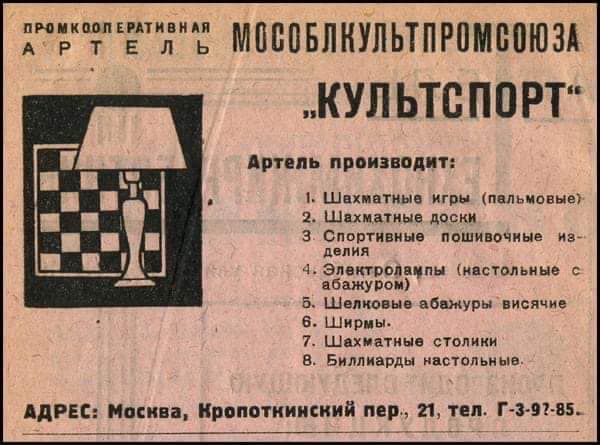
Artel Kultsport, operated in Moscow. It produced chess pieces, chess boards, chess tables, checker sets, and other sports-related items. The following advertisement from the 1930s lists the artel’s product line and lists its Moscow address.

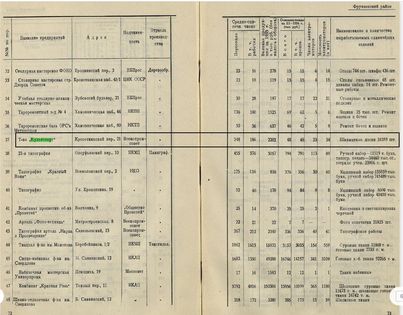
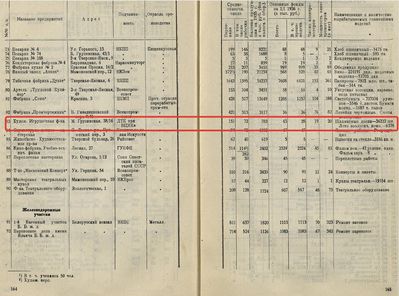
Below are two pages from the 1936 Moscow Directory recording the production of 34,359 chess boards by Kultsport, uncovered by the excellent research of St. Petersburg collector Sergey Kovalenko into the history of Soviet chess-manufacturing entities.

Kultsport produced a large number and variety of sets in a remarkable number of different designs. Here are some of the sets linked to Kultsport by evidence such as labels and stamps, or in the view of various collectors.

1930s Ferocious Knight Set

Chuck Grau Collection, photo.

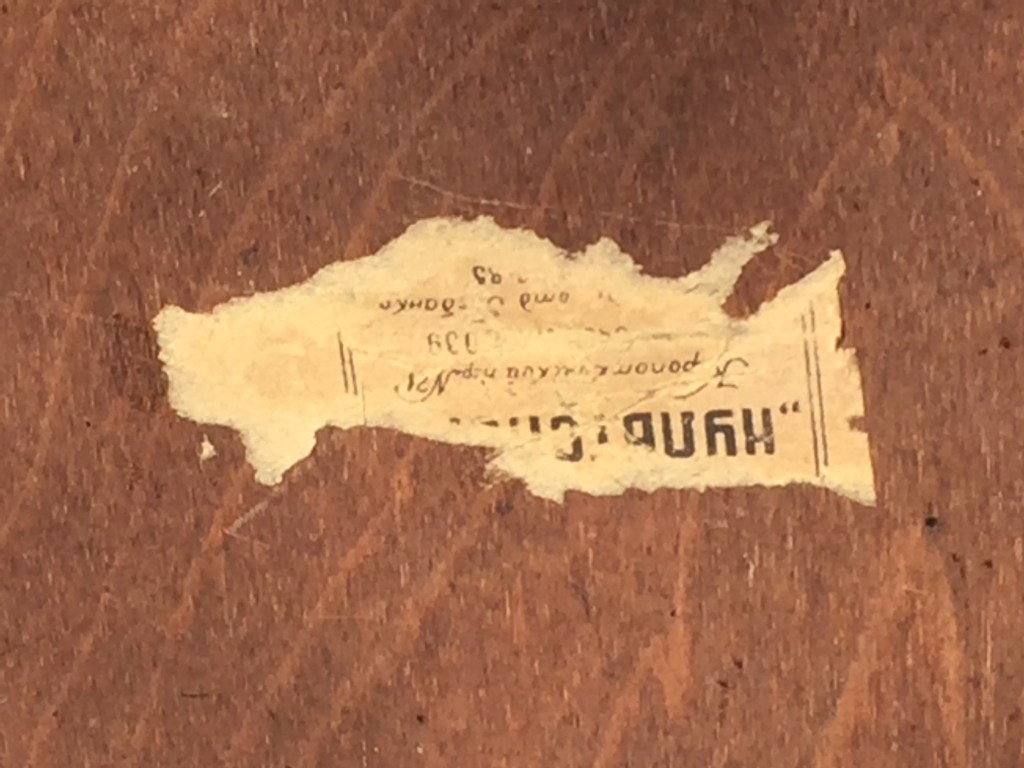
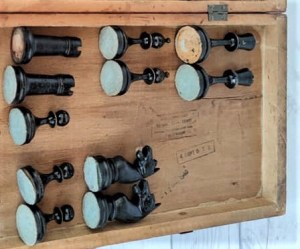
Among the most beautiful of the sets Kultsport produced was this tournament set, whose pieces are weighted, and whose kings are 100 mm tall. Although Soviet sets only rarely were named, I call this one the “Ferocious Knight” set for the knights’ menacing visages. The knights are well-carved, and the other pieces nicely turned. The set is finished with the caramel-colored varnish typical of the 1930s and is well-scarred by cigarette ash. Some of the pieces, even a rook, exhibit warping, a very uncommon affliction in Soviet sets. The red-hued board is typical for Kultsport in this period. It doubles as a storage box for the pieces, a characteristic typical of wooden Soviet sets. The inside of the box bears a partial paper label identifying it as a Kultsport product.

Here are photos from a similar 1930s set, again with a label inside the box.

Here are photos of a similar set from 1940. The board is no longer red, and the paper label has been replaced with ink stamps dating and identifying it a Kultsport product.

Even in 1940, Kultsport played with geometric motifs in its designs. Here is a set from the collection of Eduardo Bauza, closely related stylistically to the so-called Acorn and Belarusian Mushroom sets.

Some sets are said to be Kultsport products notwithstanding the absence of stamps or labels corroborating the claim. Here is another geometric design that Kiev collector and dealer Kick Filatov believes to have been made by Kultsport. Fellow Ukrainian dealer/collector Mykhailo Kovalenko is not so sure. I’ve referred to it as a Bell-Bottom set for obvious reasons.
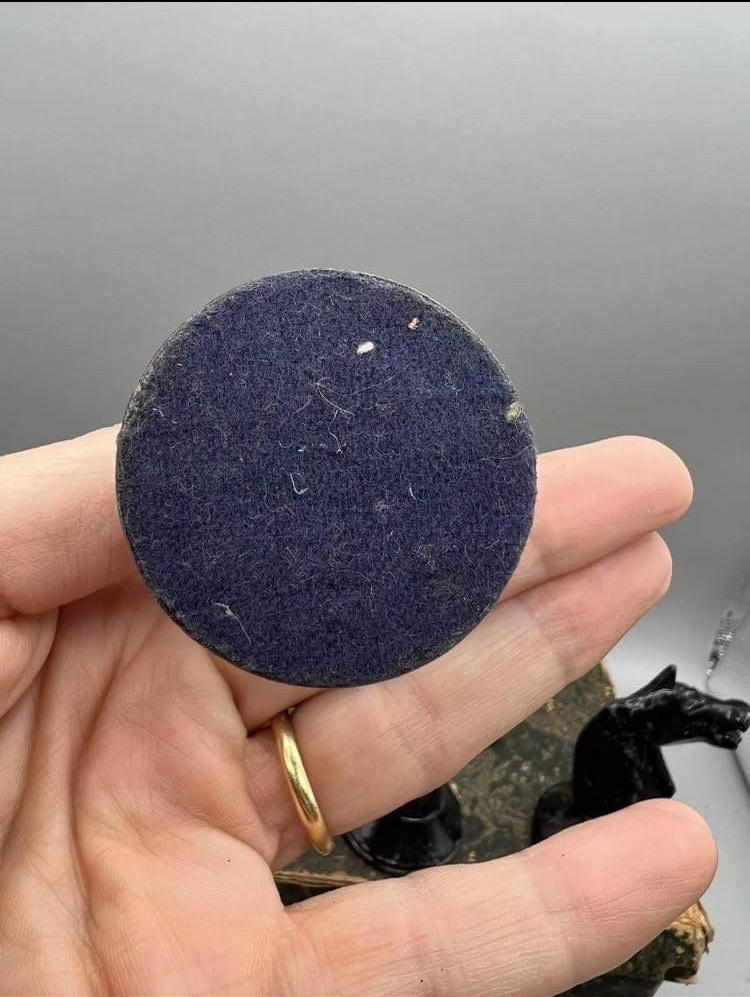
Nick Filatov photo.

Collectors of Soviet sets agree that the so-called Laughing Knight sets were produced by Kultsport, though I am unaware of any corroborating stamps or labels.

c. 1940 Laughing Knight pieces. Chuck Grau Collection, photo.

Some sets bear Kultsport stamps, but Collectors remain divided about their true origins. One such set in the collection of Baltimore collector Mike Ladzinski bears a 1941 Kultsport stamp, as does a similar set in Mike Adamski’s collection. Nevertheless, Moscow Collector Alexander Chelnokov thinks the pieces may have been made by the Red Combine artel.

So it is with this set, very similar to that used in the 1944 USSR Championship, whose board bears a Kultsport stamp, but the pieces of which Chelnokov believes may have been crafted by Red Combine.

Chelnokov has identified a large number of sets as products of Artel Kultsport that he dates between the 1915 and 1940.

Conclusion

Artel Kultsport provided a remarkable number and creative range of designs to serve the needs of the growing army of chess players enlisted by Krylenko’s program of Political Chess.

Artel Kultsport 1930s Ferocious Knight Chess Set

The 1930s saw an explosion in the production of Soviet chess sets and in the creativity of their designs. While very simplified designs began to be produced in Gulag workshops worked by largely unskilled prisoners to meet the demands of the Soviet State’s program of bringing chess and culture to the masses, smaller cooperatives of skilled artisans known as Artels threw off the yoke of the Staunton design and began incorporating Modernist and Constructivist elements into their designs.

Artel Kultsport

Artels were collectives of handicraft-producing artisans, originating in Tsarist times yet expressly recognized by Soviet law, which produced consumer goods and handicrafts. These artisans labored in a commonly owned workshop with commonly owned tools, and their products belonged to the cooperative. They organized their own production efforts and shared costs and revenues.

Artels saw a dramatic expansion during the late twenties and thirties, but an equally dramatic reduction in numbers during World War II. By 1960, all the remaining Artels had been converted to state factories. G. Phillips, Handicrafts in the Soviet Union, 14 JOURNAL OF THE INTERNATIONAL AFRICAN INSTITUTE NO. 4 209 (Oct. 1943); F. Leedy, Producers’ Cooperatives in the Soviet Union, 80 MONTHLY LABOR REVIEW 1064 (No. 9, Sept. 1957).

Foremost among the chess-producing cooperatives was Artel Kultsport, located in Moscow. Artel Kultsport produced chess pieces, chess boards, chess tables, checker sets, and other sports-related items. This “advertisement” from the 1930s lists the artel’s product line and lists its Moscow address. Ironically, the graphic designer does not appear to have been a chess player!

Source: Shakhmatnyye Kollektsionery

Here are two pages from the 1936 Moscow Directory recoding the production of 34,359 chess boards by Kultsport, uncovered by the excellent research of St. Petersburg collector Sergey Kovalenko into the history of Soviet chess-manufacturing entities.

Source: Sergey Kovalenko

The Ferocious Knight Set

Among the most beautiful of the sets Artel Kultsport produced was this tournament set, whose pieces are weighted and whose kings are 100 mm tall.

Chuck Grau Collection, photo.

The beautiful red-toned box/board contains a partial paper label linking the set to Artel Kultsport.

Chuck Grau Collection, photo.

The set is finished with the caramel-colored varnish typical of the 1930s, and is well-scarred by cigarette ash. Some of the pieces, even a rook, exhibit warping, a very uncommon affliction in Soviet sets.

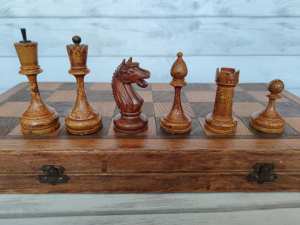
The pieces of the set retain some Staunton elements. The pieces’ relative proportions reproduce the column and pediment structure analyzed by architect and chess set designer Dan Weil. The Queen wears a coronet and the rooks turret bears merlons.

Chuck Grau Collection, photo.

At the same time, the set dispenses with the Staunton’s “triple collar.” It also replaces the King’s cross with a spiked finial, a practice that Isaak Linder documented goes back to ancient Rus. Linder, The Art of Chess Pieces (Eng. ed. 2002). The Bishop’s miter resembles the onion tops of Orthodox churches. In addition to the traditionally Russian elements, the set-identifying elements of the pieces–their bases, stems, and pedestals–form a continuous geometric curve that reflects Modernist and Constructivist influences and resides at the core of Soviet design. The rooks tubular appearance presages the barrel-rooks of sets of the early 1940s.

Chuck Grau Collection, photo.

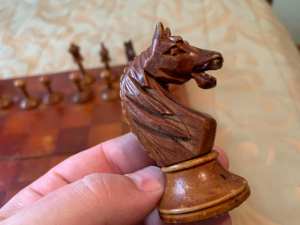
The knights of this set are magnificent. The standard Staunton S-shaped spine has been eschewed in favor of the Soviet C-shaped spine and V-shaped chest. While the carving is detailed, it depicts not the horse of the Elgin Marbles, but a highly expressive stylized horse with exaggerated eyes and over-sized mouth gaping open to bite its foe with its large and finely detailed teeth. Its forward-perked ears tell us the horse is at heightened alert, focused on the enemy to its front. By contrast, the ears of the Staunton’s Elgin Marble knight are pinned back. The sweeping side mane is beautifully carved, and the mane carvings along the spine foretell those found on the knights of the early 1940 Barrel Rook set.

Artel Kultsport Ferocious Knight. Chuck Grau Collection, photo.

Conclusion

The 1930s Artel Kultsport Ferocious Knight Set embodies the high production standards, creativity in design, and Modernist elements of Soviet artel sets of the era. Its fierce knight perhaps symbolizes the spirit to attack the future, the past, and enemies of the State both foreign and domestic.